
Land & Cedar Clearing Granbury, Leander & Across Texas
Cedar, mesquite and brush pushed, piled and gone — with the good trees left standing.
Brush Clearing That Leaves the Land Better
Cedar and mesquite are the two biggest thieves on Texas land. Cedar soaks up rainfall before it ever reaches the grass, shades out native forage, and turns an open pasture into a thicket in a couple of decades. Mesquite does the same thing on the flatter ground. By the time most landowners call us, they can't walk the property, can't see the fence, and can't run cattle on half the acres they're paying taxes on.
We clear it with a dozer, root and all, so it doesn't just grow back from a stump. Brush is pushed into piles where you want them — for burning, for wildlife cover, or out of the way along a fence line. What's left is ground you can actually use: pasture, a homesite, a barn site, or hunting land with lanes you can see down.
Selective Clearing Around the Trees You Want
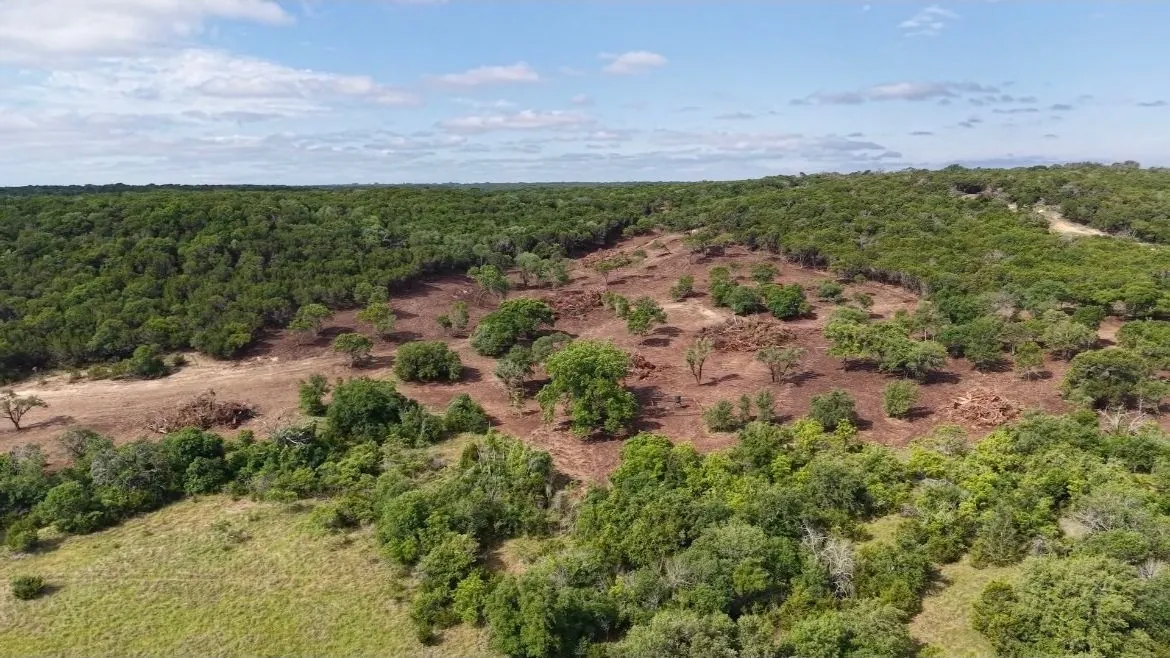
Most of the clearing we do is selective. Before the dozer moves, we walk the property with you and you point out the live oaks, post oaks, pecans and shade trees that stay. We work the brush out from around them so the land looks like a ranch when we leave, not a construction site. The aerial photo at the top of this page is exactly that — cedar gone, oaks standing.
Texas ground changes fast from one county to the next: thin soil over limestone in the hills west of Austin, sandy loam in the Cross Timbers around Granbury, black clay in the bottoms. Push too deep on a shallow rock hillside and you strip the topsoil grass needs to come back, so we set the blade to the ground we're on.
What's Included
- Cedar removal
- Mesquite and hardwood brush removal
- Selective clearing around oaks
- Pasture reclamation
- Homesite and barn site clearing
- Brush piling and stacking
- Hunting lanes and sendero cuts
- Fence line and firebreak lanes
How It Works
Walk the property
We look at the brush, the trees you want kept, the terrain, and where you want the piles.
Get a straight quote
You get a clear scope and a quote for the job — no surprise add-ons once the dozer is on site.
Clear and pile
We push the brush out by the roots, stack it where you want it, and leave the land ready for grass, a house or a fence.
How we quote: every property is different, so every job is quoted after we look at the land — the brush, the soil, the slope and what you want done. The quote is free, and the scope we agree on is the scope we do. Call (254) 248-7272 to set up a visit.
Frequently Asked Questions
How much does land clearing cost?
It depends on how thick the brush is, the size of the trees, the slope and rock, and what you want done with the piles. Every property is different, so we quote each job after we see it. Call (254) 248-7272 and describe the land and we can talk through it.
Can you clear around the trees I want to keep?
Yes — most of our clearing is selective. Walk the land with us, point out the oaks and shade trees you want left, and we work the brush out from around them.
Will the cedar grow back?
Cedar that's pushed out by the roots does not re-sprout from the stump the way cut cedar can. New seedlings will show up over the years, and catching those early keeps the land open.
What happens to the brush piles?
We stack them where you want them. Many landowners burn them once conditions and county rules allow; others leave some piles as wildlife cover.
Whether it's a few acres for a homesite outside Liberty Hill or a full ranch near Granbury or Stephenville, we'll walk it with you and tell you straight what it needs. Call (254) 248-7272 or request a free quote.
Got Land That Needs Work?
Clearing, ponds, tanks, pads or roads — call and tell us what you've got. Straight answers, no runaround.